
Naples and Collier County
What happens between the notice and being compliant again
The test itself takes a few minutes. Everything worth knowing is about what surrounds it, and about the outcome nobody plans for.
Get a plumbing quoteLast reviewed
A backflow compliance cycle runs from the utility notice, through a test by a certified tester, to submission of the result. Where a device fails, it must be repaired or replaced and retested before compliance is restored — which is the part that takes time and is rarely budgeted for.
The notice, and the date on it
The deadline is the utility's, not the tester's.
Notices arrive on the utility's cycle rather than on the anniversary of your last test, so the window can be shorter than a year since you last dealt with it.
The date that matters is the submission deadline, not the appointment date. A test performed the day before the deadline still needs its result submitted, and that is a separate step.
If you have moved into a property recently, the obligation came with the connection rather than with you. A first notice on a newly purchased home is common and is not an indication that anything is wrong.
The appointment itself
Brief, and the water goes off.
The tester attaches gauges to the test ports and closes valves in sequence to verify each check valve holds against differential pressure. It takes a few minutes per device.
Water to the property, or at least to the irrigation zone the device serves, is off during that. It is worth knowing in advance rather than discovering it mid-morning.
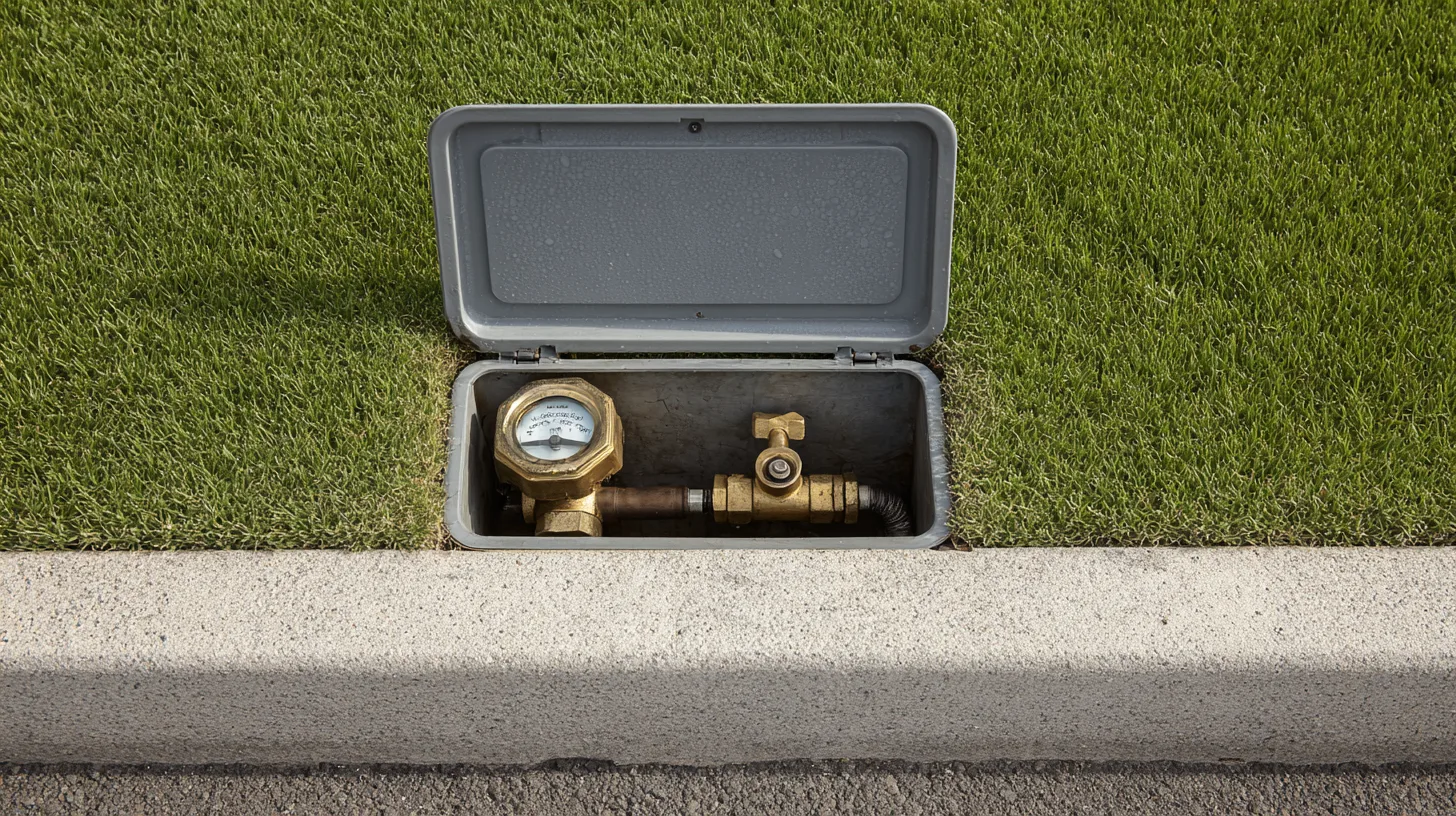
Access is the usual friction: the assembly needs to be reachable, which means clearing planting or storage that has grown up around it since the last visit. That is a five-minute job beforehand and an aborted appointment otherwise.
When the device fails: the part nobody plans for
A failed test is not the end of the process, it is the middle.
Devices fail. Springs weaken, seats foul with mineral deposits and debris, and rubber components perish in sustained outdoor heat. None of that is visible and none of it is negligence.
A failed test means the device is repaired — usually a rebuild kit of springs and seals for that specific model — or replaced where the body is corroded or the model is no longer supported. Then it is retested, because the failed test cannot be submitted as a pass.
That sequence takes longer than the original appointment and is the reason to test early in the window rather than against the deadline. Testing on the last available day leaves no room for the outcome that requires a second visit.
Submission, and what you should keep
The obligation ends at the utility, not at your file.
The result goes to the water department. Compliance is discharged by that submission, so a test performed but not submitted leaves the obligation open.
Keep the report yourself as well, with the device make, model and serial. That record matters at sale, and it makes the next rebuild simpler because the parts are model-specific.
Note the test date rather than relying on next year's notice to prompt you. Testing early in the window is what leaves room for a failure, and that only works if you are tracking the date rather than reacting to a letter.
Questions about this work
Direct answers, no sales pitch.
 JAMIE KLONCZ · GREAT HERON PLUMBING ONLINE
 Pick a question on the left, or search above. You will get the direct answer, the way an answer engine would give it.
Sources
Where we work
Contact
Tell us what is happening
The more you can say about the property — the neighbourhood, roughly when it was built, and what it is connected to — the more useful the first answer will be.
Call (239) 404-8590