
Naples and Collier County
Grease traps are a compliance schedule, not a plumbing callout
Florida sets a floor. Your local utility sets the interval you are actually inspected against. Those are two different numbers and only one of them shows up in most service quotes.
Get a plumbing quoteLast reviewed
Florida plumbing code requires a grease trap to be pumped at least once every 90 days, or whenever accumulated grease reaches 25 percent of the interceptor volume, whichever comes first (Grease Connections, 2026). Small under-sink traps generally need pumping every 30 days; larger in-ground interceptors work to the 90-day figure (StructureSmart, 2026).
The state floor, and the number you are actually held to
Two different authorities, two different intervals.
The statewide benchmark is straightforward: pump every grease trap at least once every 90 days, or whenever grease reaches 25 percent of the interceptor, whichever arrives first (Grease Connections, 2026).
What complicates it is that each city or county utility administers its own fats, oils and grease programme, and the day-to-day pump-out frequency, the citation amounts and the operating-permit terms all come from the local authority having jurisdiction (Grease Trap Locator FOG, 2026). Counties layer their own permits and fines on top of the state requirement, which is why two kitchens a few miles apart can be working to different schedules.
The practical consequence is that a service interval quoted as "the legal minimum" tells you very little on its own. The number that matters is the one your utility inspects against, and that is worth establishing in writing before you need it.
Why the capacity rule usually bites before the calendar does
Volume decides the interval, not the calendar.
The 90-day figure is a ceiling, not a schedule. A kitchen running high covers fills its interceptor faster, and once accumulated grease passes a quarter of the vessel volume the trap stops working as designed regardless of how recently it was pumped.
Small traps under a sink reach that point quickly, which is why the general guidance for them is closer to every 30 days (StructureSmart, 2026). A large in-ground interceptor serving the same kitchen might genuinely sit at the 90-day interval.
This is why covers-per-week is a better planning input than the calendar. A trap sized correctly for the kitchen and serviced on volume is a predictable line item. A trap serviced on the calendar alone is a compliance risk that arrives without warning.
What happens between pump-outs, and why the line still blocks
Pumping the trap does not clean the line running to it.
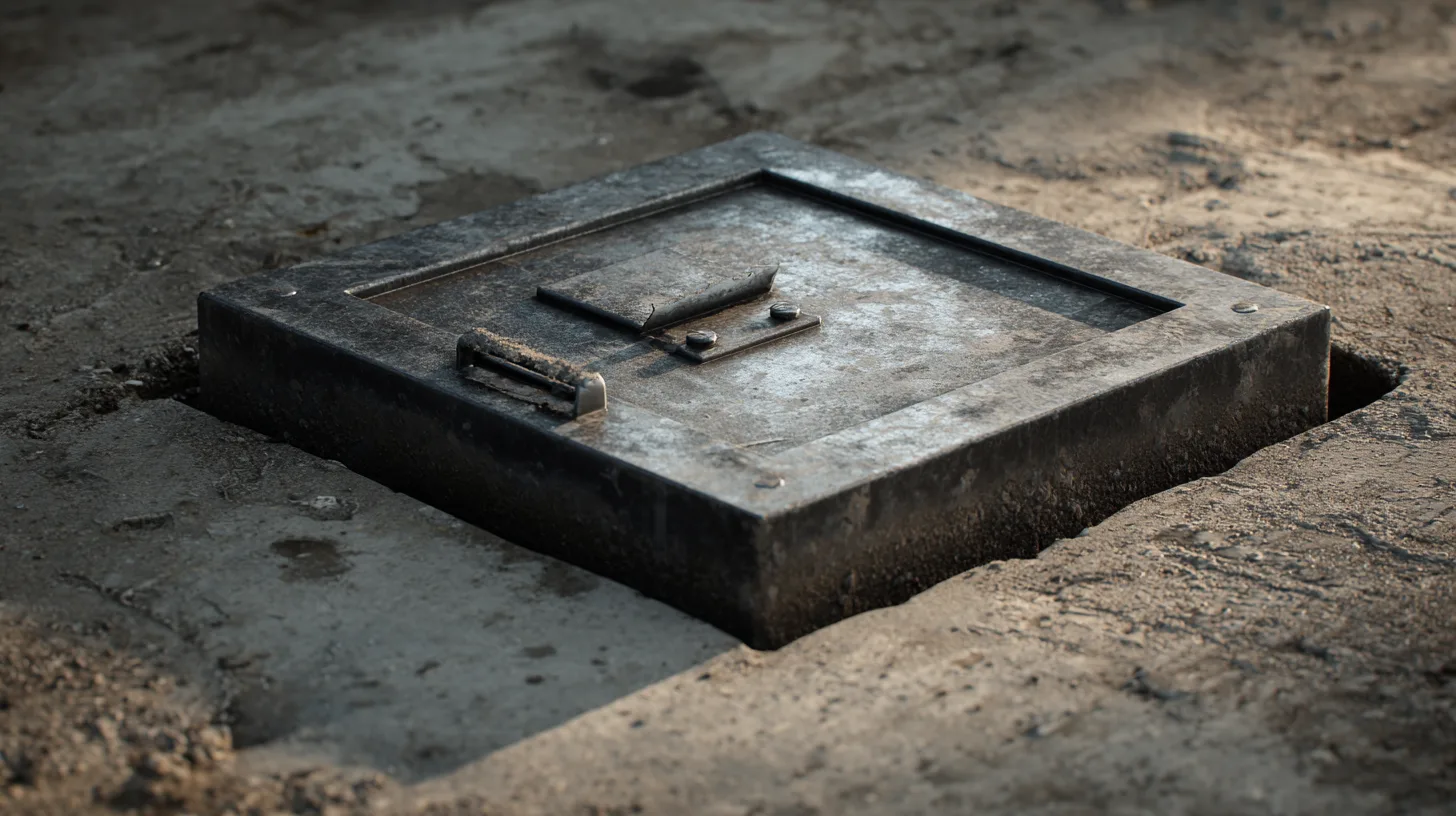
A pump-out empties the interceptor. It does not touch the drain line between the kitchen fixtures and the trap, and that line is where fats, oils and grease solidify on the pipe wall as they cool.
High-volume kitchens can build a clog-causing layer in a matter of weeks (Elite Rooter, 2026), and restaurants, food-service kitchens, hotels and apartment buildings with shared stacks generally need professional line cleaning every one to three months (Elite Rooter, 2026). That is a separate interval from the trap service, addressing a separate problem.
A kitchen on a compliant pump-out schedule that still backs up mid-service is almost always telling you the LINE has not been cleaned, not that the trap has failed.
How much does grease trap cleaning cost?
Anywhere from about $115 to $1,500 a service, and the size of your interceptor decides which end you are on.
Commercial grease trap cleaning generally runs $115 to $1,500 or more per service depending on trap size, condition and location (Grease Trap Locator, 2026). Small indoor under-sink traps on a scheduled plan typically cost $125 to $180, while large outdoor interceptors run roughly $350 to $1,500 per routine service and very large industrial systems can exceed $2,000 a visit (Grease Trap Locator, 2026).
A standard 1,000 gallon outdoor interceptor on contract sits around $225 to $450 per service (Grease Trap Locator, 2026). Across a year, most restaurants spend $1,200 to $3,600 on pump-out service alone (The Grease Company, 2026).
The single biggest multiplier is not size, it is neglect. A trap that has not been pumped in over six months, with solidified fats, oils and grease in it, can cost two to three times the standard rate to clear (Grease Trap Locator, 2026). That is the whole argument for a schedule in one sentence.
| Trap type | Typical cost per service | Notes |
|---|---|---|
| Indoor / under-sink, on plan | $125–$180 (Grease Trap Locator, 2026) | Smallest units, most frequent access. |
| 1,000 gallon outdoor, on contract | $225–$450 (Grease Trap Locator, 2026) | The common restaurant configuration. |
| Large outdoor interceptor | $350–$1,500 (Grease Trap Locator, 2026) | Routine service; scope drives the range. |
| Industrial system | $2,000+ (Grease Trap Locator, 2026) | Per visit, on the largest installations. |
| Neglected 6+ months | 2–3× standard rate (Grease Trap Locator, 2026) | Solidified FOG. The avoidable cost. |
How often should a restaurant grease trap be pumped?
Quarterly is the common default. A busy kitchen on a 1,000 gallon interceptor is frequently every four to eight weeks.
Grease traps are typically serviced quarterly to prevent blockages and sewer contamination (Grease Trap Locator, 2026). But a 1,000 gallon interceptor serving a genuinely busy restaurant usually needs pumping every four to eight weeks (Grease Trap Locator, 2026), which is a very different schedule and a very different annual number.
The interval is set by volume of covers, not by the calendar, and that is why a fixed quarterly plan is either wasteful or too late for most sites. The way to find the right interval is to measure it: the first two or three services tell you the actual accumulation rate for your kitchen.
In Southwest Florida there is a seasonal layer on top. A kitchen whose covers more than double between Thanksgiving and Easter cannot run the same interval year round, and the cheapest service is the one done before season rather than during it.
What actually happens during a grease trap service?
Full pump-out, scrape, inspection and a written record. A partial service costs the same in disruption and buys far less time.
The service starts by removing the entire contents, not just the floating grease layer. A trap holds three layers: fats and oils on top, water in the middle, and settled solids on the bottom. Pumping only the top layer is faster and cheaper for the operator and it leaves the sludge that causes most of the odour and most of the eventual blockage.
The interior surfaces are then scraped. Grease bonds to the walls and to the baffles, and material left in place becomes the seed for the next accumulation, which is why a properly scraped trap stays clear noticeably longer than a merely pumped one.
The baffles and tees get inspected while the trap is empty, and this is the part with the longest consequences. A damaged or missing baffle means the trap is not separating properly regardless of how often it is pumped, so grease is passing into the sewer line and the interceptor is providing documentation rather than protection.
Inlet and outlet lines are checked for build-up. A trap can be clean and the line leaving it can be restricted, and that combination produces a backup that looks inexplicable if only the trap has been looked at.
The visit should end with a written manifest: date, volume removed, condition observed and disposal destination. For an operator who has to demonstrate compliance, that record is the deliverable — the cleaning is what makes the record true, but the record is what an inspector asks for.
Ask whether the service is a full pump-out or a skim, and get the answer in writing on the invoice. The two are priced differently and the difference is not always visible at the point of sale.
What happens if a grease trap is neglected?
A sequence, and each stage costs more than the one before it. The last stage is not a plumbing problem.
The first stage is cost. A trap that has not been pumped in more than six months, with solidified fats and oils in it, runs two to three times the standard rate to clear (Grease Trap Locator, 2026) — so the saving from skipping services is reversed the first time it is caught up.
The second is odour, and it arrives before any blockage. Anaerobic breakdown in the settled solids produces hydrogen sulphide, which is what customers smell and what corrodes the metalwork above the water line. In a dining room this stops being a maintenance issue and becomes a trading one.
The third is the line. Grease that passes an overloaded trap cools and hardens in the pipe downstream, and that build-up narrows the bore progressively rather than suddenly. The kitchen usually notices as slow drainage weeks before anything stops, which is the last cheap warning available.
The fourth is the backup itself, and its timing is not random. A marginal line fails under peak load, which means it fails during service, on the busiest night, with a full room. The repair cost is almost irrelevant next to the closure.
The fifth is regulatory. Discharging grease into the municipal system is not permitted, and a documented history of missed services converts an incident into a compliance finding. At that point the conversation is no longer about plumbing cost at all.
Every stage is avoided by the same thing: a schedule set from measured accumulation rather than optimism, and a record that shows it was kept.
How do you work out the right interval for your kitchen?
Measure it. Two or three services produce a real accumulation rate, and a rate beats an assumption.
Start from the rule of thumb, then stop using it. Quarterly is the common default (Grease Trap Locator, 2026) and it is a reasonable opening position, but a 1,000 gallon interceptor under a genuinely busy restaurant frequently needs pumping every four to eight weeks (Grease Trap Locator, 2026). The gap between those two schedules is the difference between compliance and a backup.
The measurement is straightforward. At each service, record the date and the depth or volume of accumulated grease and solids. Two intervals give you a rate; three give you confidence in it. From there the correct interval is whatever keeps accumulation below the threshold at which separation degrades, which is generally around a quarter of the trap depth.
Then adjust for season. A Southwest Florida kitchen serving a population that more than doubles between Thanksgiving and Easter does not have one accumulation rate, it has two, and a single annual interval will be either wasteful in summer or inadequate in March.
Menu changes matter more than most operators expect. Adding a fryer, changing a supplier, or shifting toward higher-fat preparation changes the loading immediately, and the trap does not care that the schedule was set before the menu changed.
The economics justify the effort. Most restaurants spend $1,200 to $3,600 a year on pump-out alone (The Grease Company, 2026), so moving from an over-frequent schedule to a measured one is real money, and moving from an under-frequent one avoids the two-to-three-times penalty on a neglected trap (Grease Trap Locator, 2026).
Whatever interval you land on, keep it documented. The record is what proves the schedule existed, and a schedule you cannot evidence is worth very little at the moment somebody asks.
Who is responsible when a grease line backs up in a leased unit?
It depends on the lease, and the answer is worth knowing before the backup rather than during it.
In most commercial leases the interceptor serving a single tenant is the tenant's to maintain, because it exists to serve that tenant's operation. Where an interceptor is shared between units in a plaza, responsibility usually sits with the landlord and is recovered through common area charges, which changes who schedules the work and who holds the records.
The distinction matters most when something fails. A tenant who has diligently serviced their own trap can still be affected by a shared line downstream that nobody has been maintaining, and the first anyone looks for is the service history of the nearest kitchen.
This is why the documentation is worth more than it appears. A dated manifest for every service establishes that the obligation was met, and it does so at exactly the moment when memory and goodwill are least useful.
It is worth reading the lease specifically for three things: who owns the interceptor, who is obliged to service it and at what interval, and who is liable for damage arising from a failure. Those three answers determine whether a backup is a maintenance item or a dispute.
For a landlord or property manager the equivalent question is whether tenant service records are being collected at all. An interceptor serving several kitchens with no consolidated record is a liability sitting quietly until it is not.
Questions about this work
Direct answers, no sales pitch.
 JAMIE KLONCZ · GREAT HERON PLUMBING ONLINE
 Pick a question on the left, or search above. You will get the direct answer, the way an answer engine would give it.
Sources
- Fla. Stat. 489.119(5)(b) — Business organizations; qualifying agents (Online Sunshine)
- Licensing Portal — License Search, Florida Department of Business and Professional Regulation
- Florida Grease Trap Regulations 2026: FOG Rules & City Fines — Grease Trap Locator
- Florida Grease Compliance: 90-Day Rule & County Fees — Grease Connections
- Grease Trap & Restaurant Drainage Requirements Guide — StructureSmart
- Drain Cleaning Cost 2026: Snaking, Hydro Jetting & Chemical — Elite Rooter
- Grease Trap Cleaning Cost 2026: Pricing by Trap Size & Frequency — Grease Trap Locator
- Grease Trap Cleaning Cost Guide for Restaurants in 2026 — The Grease Company
Where we work
Contact
Tell us what is happening
The more you can say about the property — the neighbourhood, roughly when it was built, and what it is connected to — the more useful the first answer will be.
Call (239) 404-8590