
Naples · Collier County, Florida
Plumber in Naples, Florida
Emergency plumbing, drain cleaning, water heaters, repiping and leak detection across Naples, Collier County and Bonita Springs. We work on the cause of a failure, not the symptom — so follow the water.
Get a plumbing quote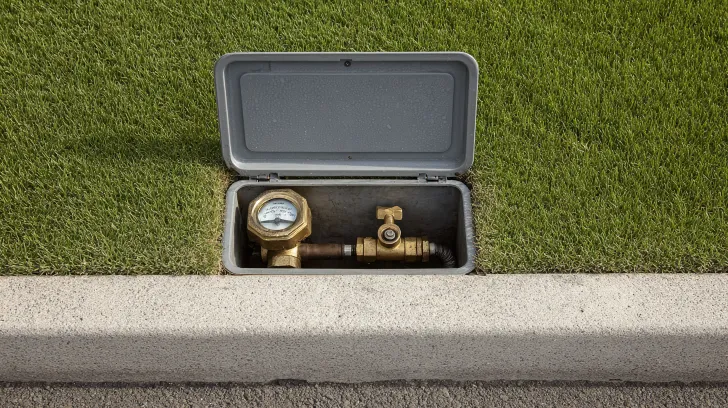
01 Surface
Where is my water shutoff?
At the meter box near the property line, and usually at a second valve where the supply enters the house. Finding both before you need them is the single most useful thing a Naples homeowner can do, because every emergency starts with stopping the water.
Emergency plumbing
02 The main
What is my supply pipe made of?
It depends on when the house was built. Homes plumbed between January 1978 and July 1995 may carry polybutylene, which fails at the fittings regardless of how well it has been looked after. Copper, CPVC and PEX all behave differently again.
Repiping and polybutylene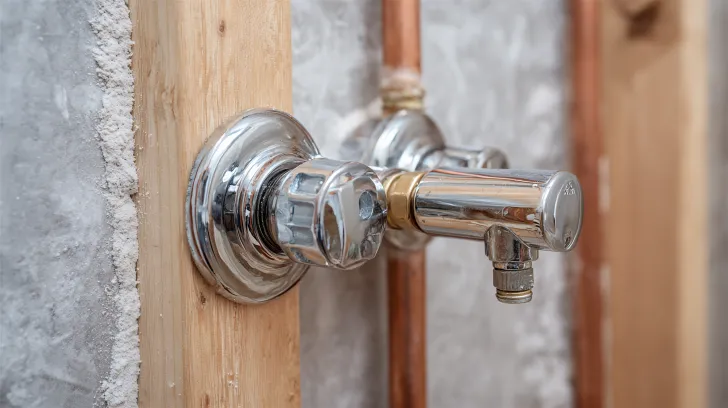
03 Branches
Why is the damage not where the leak is?
Because water travels along structure before it appears. A failed joint inside a wall shows up as a stain in the next room or the ceiling below, which is why locating the source matters more than reacting to the symptom.
Leak detection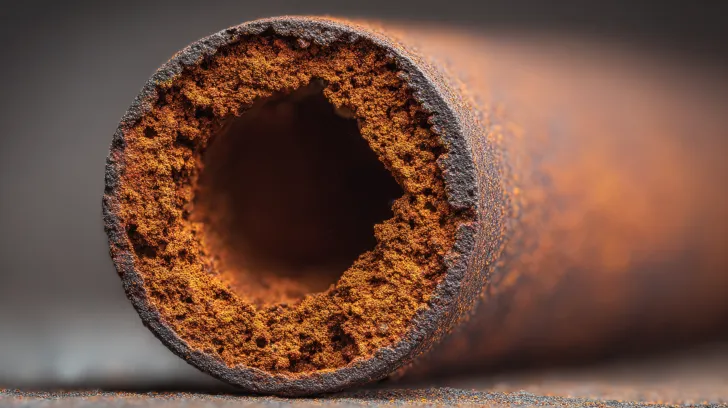
04 The fault
What actually fails in Naples homes?
On housing built before 1972, cast iron drains corroding from the inside. On newer housing, installation faults and ground movement. On acreage, distance. The honest answer changes with the address, which is why this site is organised by neighbourhood.
Cast iron failure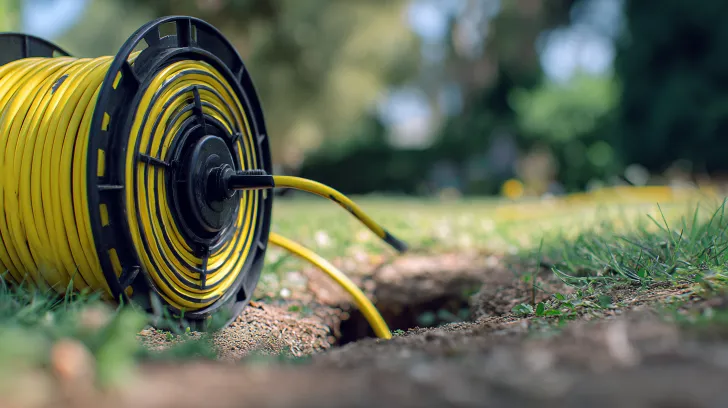
05 The seal
How do you find the cause instead of guessing?
A camera in the line, with the distance recorded. It establishes material, condition and exactly where a defect sits, which turns a quote from an estimate into a scope. Anything recommended without one is a recommendation about a generic house.
Camera inspection
06 Still water
What should it cost to stop worrying about it?
Less than most people expect, once the cause is known. The expensive pattern is repeated call-outs against a fault nobody has looked at. Find it once, fix the mechanism, and the plumbing goes back to being something you do not think about.
All servicesNaples and Collier County
What fails here depends on when your street was built
Collier County is not one place, and its plumbing is not one problem. A street paved in the late 1950s, land sold in 1960 with no utilities at all, and a community finished after 2000 are all inside the same service area. Each decade put different pipe in the ground.
So a diagnosis that travels well in one neighbourhood is wrong two miles away. Where the housing predates 1972, cast iron is the reasonable first suspicion (Revolution Florida, 2026). Where it does not, leading with corrosion means selling the wrong repair to the wrong house.
Two questions settle it before anyone quotes work: which era the property belongs to, and whether it is on county sewer or its own septic. In parts of Golden Gate that second one is still genuinely open. Everything else follows from those two answers.
| Neighbourhood | What that means for the plumbing |
|---|---|
| North Naples | Planned communities and condominiums, so responsibility for a pipe is often split. |
| Golden Gate | Sold in 1960 with no utilities. Wells and septic here, county sewer there. |
| Pine Ridge | Acreage lots from the 1960s, which puts a long private lateral in every yard. |
| Lely Resort | Built out after 2000, past both the cast iron and polybutylene eras. |
| Naples Park | Streets paved in the late 1950s, squarely inside the cast iron window. |
| Marco Island | Opened in 1965 and built across the material boundary, so phase decides the pipe. |
| Bonita Springs | Lee County, and grown in the 1980s and 90s. Young enough that age is rarely the fault. |
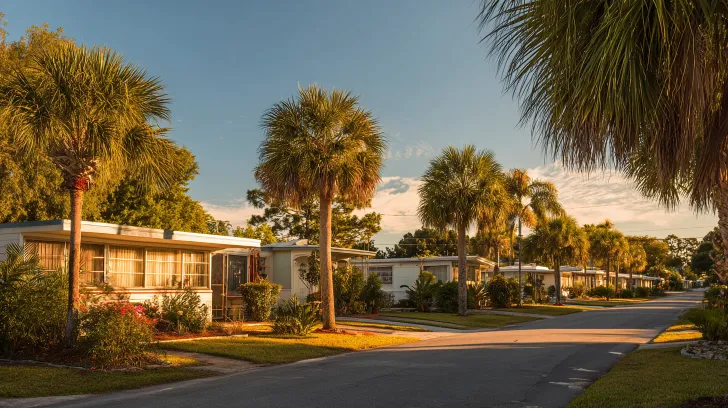
Who regulates your plumbing depends on your address
One of the more confusing things about plumbing in this area is that the authority responsible for what happens outside your property line is not the same for every address, and it is not obvious from the neighbourhood name. A property inside the City of Naples deals with the city (City of Naples, 2026). Much of what people call Naples is unincorporated Collier County and deals with the county utility instead (Collier County Public Utilities, 2026). Bonita Springs is not in Collier County at all — it is in Lee County (City of Bonita Springs, 2026), with different utility provision and different permitting.
That matters at exactly the wrong moment. When something backs up and it is unclear whether the fault sits on the property or beyond it, the difference between calling the right authority and the wrong one is measured in hours, during which the problem is still happening. It also matters for permits, because work requiring one is permitted by whichever jurisdiction the property sits in rather than by whichever is nearest.
The practical step is a five-minute one and it is worth taking before you need it: establish which utility bills you, and therefore which authority you would report a problem to. It is not a question anyone wants to research while standing in water. A contractor who works across the county should be able to tell you immediately which side of the line an address falls on, and a contractor who cannot is telling you something about how much work they do here.
Why a quote from a few miles away can be wrong
Because the two properties are frequently not made of the same thing. The housing in this county spans from streets paved in the late 1950s to communities finished well after 2000, and the material that went into the ground changed across that span. A recommendation built on one era, applied to a property from another, produces work that is either unnecessary or aimed at the wrong failure entirely.
The direction of the error runs both ways, and both are expensive. Assume the older story on newer housing and you are quoting for a corrosion problem the property does not have. Assume the newer story on older housing and you leave the actual condition unexamined, which is worse, because the thing you did not look at continues regardless. Neither error is caught by the customer at the time, since both produce a plausible-sounding quote.
This is the reason so much of this site is organised by neighbourhood rather than by service. It is not a search tactic. It is that the honest answer to "what is wrong with my drain" genuinely differs between Naples Park and Lely Resort, and a single citywide page cannot hold both positions at once without contradicting itself. The neighbourhood pages exist so that each can say the thing that is actually true there.
For a homeowner comparing quotes, the useful test is not price. It is whether the contractor asked anything about the property before arriving at a recommendation — the build era, what it is connected to, what has been done to the ground around it. A quote produced without those answers is a quote for a generic house, and there is no generic house in this county.
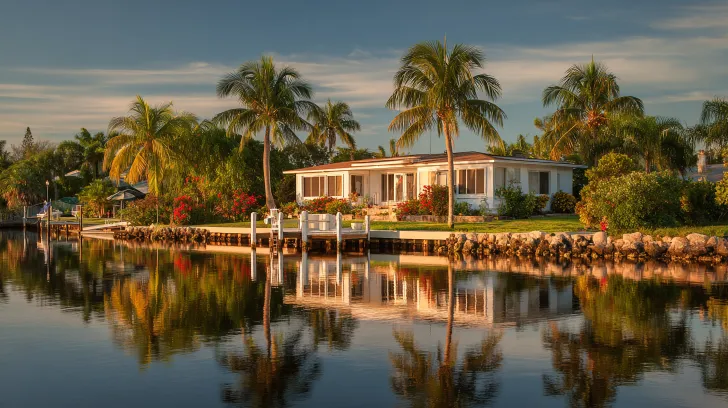
The season changes what goes wrong, not just how busy it is
Collier County has a large seasonal population, and the consequence for plumbing is not simply that contractors are busier between roughly November and April. It is that the failure profile itself changes. A substantial share of the housing here stands unoccupied for months at a time, and an unoccupied property does not fail differently — it fails unobserved, which is the entire difference between a leak and a damaged house.
That produces two distinct calendars. For a seasonal owner, the work worth doing is concentrated around departure and return: isolating the supply, making sure whoever holds a key can find the valve and knows it turns, and opening the property back up in an order that surfaces a problem in the first minute rather than the first week. None of it is technically demanding and all of it is time-sensitive in a way that ordinary maintenance is not.
For anyone operating commercially, the same season arrives as the opposite problem. Loading rises sharply on systems sized and scheduled during quieter months, so an interval that held comfortably in summer stops holding when covers double. The work is the same work; what changes is that deferring it becomes considerably more expensive at precisely the point when everyone else wants the same appointment.
The common thread is that the calendar does most of the work if it is set deliberately. Both problems are cheap to prevent and disproportionately expensive to discover late, and neither is solved by finding a faster contractor once something has already gone wrong.
How to check a Florida plumbing contractor is licensed
Plumbing contracting in Florida is regulated by the Department of Business and Professional Regulation, and the requirement is more specific than most people expect. A contractor’s registration or certification number must appear in every offer of services, business proposal, bid, contract or advertisement, regardless of medium (Fla. Stat. 489.119, 2025). "Regardless of medium" includes a website, so a licence number that is nowhere on a contractor’s site is not a presentational choice.
You do not have to take anyone’s word for the number either. The DBPR runs a public licence search that anybody can use, by name or by licence number (Florida DBPR, 2026), and it takes about a minute. It is worth doing before you need somebody rather than during an emergency, when the incentive is to call whoever answers.
The same search is where a licence status shows as current or otherwise, which is the part that a number printed on a van cannot tell you. A number is a claim; the search is the verification. For work of any size it is a reasonable thing to check, and any legitimate contractor expects customers to do it.
The work we will tell you not to do
A recurring theme across every page on this site is a recommendation against something, and it is worth stating plainly on the front page because it runs against how plumbing is usually sold. On thinned cast iron, the more powerful cleaning tool is frequently the wrong one, and the right answer is the gentler method plus an honest conversation about the pipe’s remaining life. On housing built after 2000, a scheduled maintenance programme is generally money spent against a risk that stock does not carry. On a long rural lateral, length alone is not a reason to replace anything.
Those are all recommendations to spend less, and each one is specific to a kind of property rather than a general philosophy. That specificity is the point: the same contractor should be recommending a camera inspection before anything else in one neighbourhood and recommending nothing at all in another, because the properties genuinely differ.
The corollary is that a recommendation which is identical regardless of the address is not really a recommendation. If the proposed work would be the same on a 1950s property with original drains and on a community finished after 2000, then the property was not part of the reasoning. That is a reasonable question to put to anyone quoting, including us.
Where to start, depending on what you already know
If something is actively happening — water where it should not be, or no water at all — the first move is isolation rather than diagnosis. Find the shutoff, confirm it turns, and stop the supply. Everything else can be worked out once the volume has stopped increasing, and almost nothing else matters until it has.
If nothing is wrong and you want to know where you stand, the useful first step depends on the property rather than on the calendar. On older housing the single most informative thing available is a camera survey of the drain line, because material and condition are the largest unknowns and neither is visible from inside. On newer housing the same survey is worth doing once, early, for a different reason: it establishes a dated baseline and can still catch an installation fault while there is somebody to raise it with.
If you are buying, bring both forward. A finding before closing is a negotiating position, and the identical finding afterwards is simply a bill you now own. On a property with acreage, add locating the lateral to that list, because knowing where it runs changes the cost of every job that follows.
And if you are not sure which of those describes you, the neighbourhood pages below are organised by exactly that question. Each one opens with what actually distinguishes that area, which is usually enough to tell you whether you are in the look-first case or the leave-it-alone case.
Plumbing in Southwest Florida, answered
What actually goes wrong in Naples homes, and why. No forms, no sales pitch.
 JAMIE KLONCZ · GREAT HERON PLUMBING ONLINE
 Pick a question on the left, or search above. You will get the direct answer, the way an answer engine would give it.
Contact
Tell us what is happening
The more you can say about the property — the neighbourhood, roughly when it was built, and what it is connected to — the more useful the first answer will be.
Call (239) 404-8590